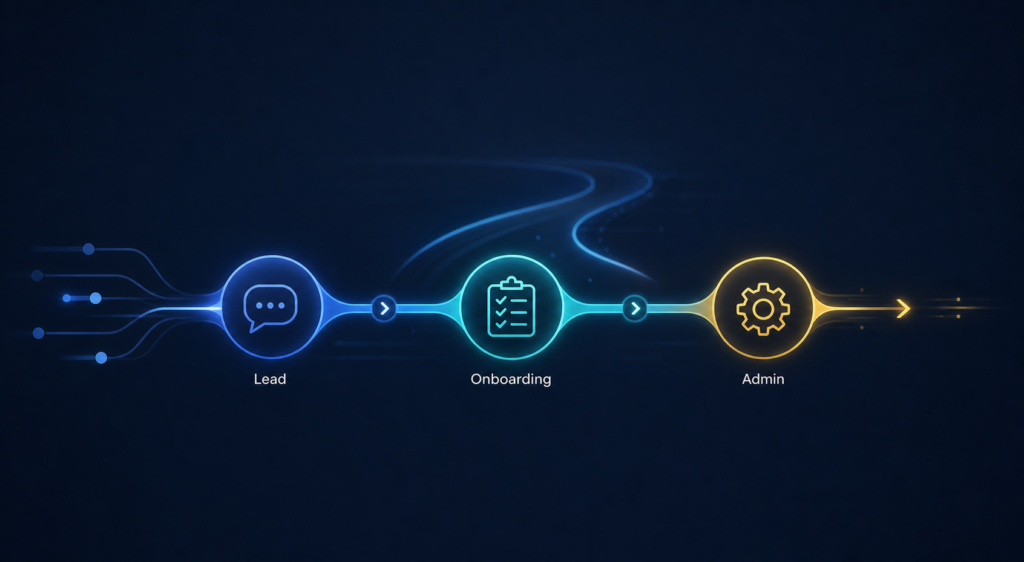

You do not need to start with a complicated system to benefit from automation. A useful automation can be as simple as saving an email attachment to the right folder, reminding you when a lead needs a reply, or creating a project checklist when a new client signs.
Table of Contents
The harder part is often deciding what to automate. This guide gives you 100 practical automation ideas for everyday work, side hustles, and small businesses. The examples cover lead follow-up, sales, client onboarding, administration, finance, marketing, support, and personal productivity.
Use the list for inspiration, not as a checklist you must complete. The best first automation is usually a small, repetitive process that already has a clear beginning, a predictable set of steps, and an obvious result.
What is workflow automation?
Workflow automation connects the tools and steps in a repeated process so that routine work happens automatically. A form submission might create a contact, send an acknowledgment, notify the right person, and schedule a follow-up task without anyone copying the same information between systems.
Not every automation needs artificial intelligence. Rules are often better for predictable actions such as moving data, sending reminders, or creating tasks. AI is most useful when a workflow needs help interpreting unstructured information, such as summarizing meeting notes or classifying an inquiry. Important decisions should still have appropriate human review.
10 useful automation ideas to start with
If you want a shorter starting point, these ten ideas are useful in many small businesses:
- Send an immediate acknowledgment when a new inquiry arrives.
- Create a follow-up task when a lead has not received a human reply.
- Send appointment reminders with an easy rescheduling link.
- Create a client onboarding checklist after a proposal is accepted.
- Remind clients about missing forms, files, approvals, or access.
- Turn meeting notes into decisions, action items, owners, and deadlines.
- Save and rename email attachments in the correct project folder.
- Generate an invoice draft when an approved milestone is completed.
- Send a daily summary of urgent tasks, overdue work, and failed workflows.
- Ask for feedback after a service has been delivered.
For a more focused starting process, read which small-business processes to automate first.
Personal productivity and everyday admin automation ideas
These ideas reduce small pieces of repeated personal administration. They can help you start the day with better information and spend less time organizing files, messages, and reminders.
- Create a morning briefing. Combine today’s calendar, priority tasks, weather, and travel information into one email or message.
- Detect calendar conflicts. Flag overlapping meetings and suggest alternative times before the conflict becomes a problem.
- File receipts and invoices. Save attachments from selected emails into a folder organized by month, supplier, or category.
- Track subscriptions and free trials. Send a reminder before a trial, membership, or software subscription renews.
- Send bill-due reminders. Notify you before recurring bills are due without automatically moving or spending money.
- Turn voice notes into actions. Transcribe a voice note, save it in a searchable place, and extract tasks or reminders for review.
- Summarise meetings. Convert a meeting transcript into decisions, open questions, action items, owners, and deadlines.
- Build a travel itinerary. Collect booking emails for flights, accommodation, and tickets into one organized trip summary.
- Prepare a recurring shopping list. Build a draft list from a meal plan or commonly purchased household items.
- Organise and back up files. Rename, sort, and copy files or photos while checking for duplicates before anything is deleted.
Side-hustle and solo-business automation ideas
A side hustle often has the same moving parts as a larger business, but less time available to manage them. These automations can support sales and delivery without making the process feel impersonal.
- Record new inquiries. Add website form submissions to a simple tracker and send a clear acknowledgment.
- Move sales into an order board. Create an order record when a sale arrives from a marketplace or online shop.
- Prepare a proposal draft. Use answers from a discovery form to populate a proposal template for review.
- Manage booking communication. Send confirmations, reminders, preparation notes, and rescheduling options around appointments.
- Prepare invoices from completed work. Create an invoice draft from approved time entries or finished milestones.
- Log expenses from receipts. Extract the supplier, date, tax, currency, and total into an expense tracker for verification.
- Collect content ideas. Send notes, bookmarks, and customer questions into one editorial queue.
- Repurpose approved content. Turn a published article or video into draft social posts and newsletter sections.
- Deliver digital products. After confirmed payment, send the buyer the correct file, access instructions, and support information.
- Create a weekly business summary. Combine sales, inquiries, deadlines, overdue tasks, and expenses into one review.
Lead capture and follow-up automation ideas
Fast, consistent follow-up helps a potential client understand what happens next. The goal is not to send more messages. It is to prevent good inquiries from being lost between an inbox, a spreadsheet, a calendar, and a customer relationship management system.
- Create a lead record from a website inquiry. Add the contact details, message, consent information, and submission time to your lead tracker.
- Send an immediate acknowledgment. Confirm that the inquiry arrived and explain when the person can expect a human response.
- Detect duplicate leads. Check email addresses, phone numbers, and company details before creating another record.
- Prepare a company research summary. Collect relevant public information about a business and present it for human review before a sales call.
- Preserve lead-source data. Record the campaign, page, form, referral source, and tracking parameters that produced the inquiry.
- Score leads against clear criteria. Apply agreed rules for service fit, location, budget range, urgency, or business type.
- Route inquiries to the right person. Assign a lead based on service, language, location, availability, or account ownership.
- Alert the team about a high-fit lead. Send a concise notification containing the useful context, not just a form-submission alert.
- Create an overdue-response task. Notify the owner when a new lead has not received a human reply within the agreed period.
- Run a careful no-response sequence. Send a limited series of helpful follow-ups and stop automatically when the person replies or opts out.
- Find leads ready for reactivation. Identify older contacts who previously engaged but did not proceed, then prepare them for manual review.
- Acknowledge missed calls. Send a short message confirming the call was missed and offer a clear way to request a callback.
- Capture leads from social messages. Add qualified inquiries from approved social channels to the same lead-management process.
- Send the correct booking link. After qualification, direct the lead to the relevant meeting type rather than a generic calendar.
- Create a weekly lead digest. Summarise unanswered, unassigned, overdue, and stalled opportunities for review.
If inquiries frequently go cold or receive inconsistent replies, these signs that your lead follow-up needs automation can help you identify the underlying gap.
Sales, proposals, and scheduling automation ideas
Sales workflows contain many small handoffs: qualification, calls, proposals, approvals, signatures, deposits, and follow-up. Automating the administrative steps can leave more room for an informed human conversation.
- Send a qualification questionnaire. Collect the essential context before a discovery call so both sides can prepare.
- Draft a proposal from existing information. Populate a template using approved CRM fields and meeting notes.
- Prepare a quote for approval. Insert agreed services and quantities while requiring a person to approve the final price.
- Update deal stages from key events. Move an opportunity when a proposal is viewed, accepted, declined, or signed.
- Start onboarding after acceptance. Mark the opportunity as won and trigger the appropriate next steps after the required agreement or payment.
- Send the correct deposit link. Provide payment instructions after the scope and price have been approved.
- Suggest meeting times intelligently. Respect working hours, time zones, travel time, and buffers between calls.
- Send appointment reminders. Include the agenda, joining details, preparation requirements, and a rescheduling option.
- Create a pre-meeting brief. Summarise the contact, company, previous messages, open questions, and desired outcome.
- Turn sales calls into follow-up notes. Extract objections, decisions, commitments, and next steps from the transcript for review.
Client onboarding and service-delivery automation ideas
A strong onboarding process makes the next step clear for the client and the delivery team. Automation can create consistency while keeping sensitive access, scope decisions, and client communication under human control.
- Send a personalized welcome email. Trigger the correct message after the agreement, deposit, or another defined starting condition.
- Send the right intake form. Choose the questionnaire based on the service the client purchased.
- Chase missing onboarding items. Remind the client about outstanding forms, files, approvals, or access without asking for items already supplied.
- Create the client record. Add the agreed contact, billing, scope, and communication details to the main system.
- Create a project from a template. Add standard phases, tasks, owners, dependencies, and realistic due dates.
- Prepare the project folder structure. Create consistently named folders and share only the appropriate locations.
- Set up the communication channel. Create the agreed client channel or workspace and add the relevant participants.
- Assign an internal owner. Notify the responsible person and provide the context needed to begin.
- Offer kickoff times when prerequisites are complete. Wait until required information or payment has arrived before opening scheduling.
- Create a secure access checklist. Track which accounts or permissions are needed without sending passwords through insecure messages.
- Keep the client portal current. Update approved project status, next steps, and deliverable links from the delivery system.
- Send milestone and approval reminders. Prompt the right person when work is ready to review or a decision is blocking progress.
- Manage deliverable approvals. Record whether an item is approved, needs changes, or is waiting for feedback.
- Classify change requests. Route feedback as an included revision, a question, a defect, or possible additional scope for human review.
- Run the project handoff. Prepare final files, documentation, access changes, feedback requests, follow-up dates, and archive tasks.
For a closer look at this stage, see the guide to client onboarding automation for small businesses.
Administration, operations, and team automation ideas
Operations automation works best when it reduces copying, forgotten handoffs, and avoidable uncertainty. It should also make failures visible rather than quietly hiding them.
- Classify incoming email. Tag messages by topic, urgency, client, or responsible person and leave uncertain cases for review.
- Save and rename attachments. Put approved email attachments in the correct client or project folder using a consistent naming rule.
- Turn form submissions into tasks. Create actionable work with the original answers, source link, due date, and owner attached.
- Create recurring checklists. Generate the correct checklist for weekly, monthly, quarterly, or event-based work.
- Route approval requests. Send expenses, content, documents, or decisions to the right approver and record the outcome.
- Synchronise status between systems. Keep agreed fields current when a project, ticket, deal, or client changes stage.
- Detect duplicate records and files. Flag likely matches before merging contacts or deleting documents.
- Find missing or invalid data. Identify incomplete email addresses, dates, owners, required fields, or inconsistent formats.
- Generate standard documents. Fill approved templates for briefs, agendas, checklists, letters, or handover notes.
- Track contract renewals and notice periods. Alert the owner early enough to review, renew, renegotiate, or cancel.
- Track operational renewals. Monitor software, domains, insurance, certificates, and vendor agreements.
- Escalate overdue work. Remind the task owner first, then notify a manager only when the agreed threshold is reached.
- Create a daily operations digest. Summarise urgent work, blockers, overdue tasks, approvals, and unusual events.
- Escalate critical failures. Alert the right person when a website form, payment, server, or other essential service stops working.
- Monitor automations themselves. Record failures, retry safe steps, prevent duplicates, and create a clear recovery task when human help is needed.
Finance, documents, and reporting automation ideas
Finance automations can prepare and organize information, but final payments, tax treatment, and sensitive approvals usually deserve human oversight. Build an audit trail so you can see what happened and why.
- Extract receipt details. Read the supplier, date, amount, currency, and tax from receipts and flag uncertain fields.
- Import and deduplicate bank data. Bring approved statement exports into a tracker without counting the same transaction twice.
- Create an invoice draft after a milestone. Prepare the correct line items when work is approved or a billing date is reached.
- Update payment status. Reflect confirmed payments in the CRM, project tracker, or accounting handoff process.
- Send approved overdue-invoice reminders. Follow a polite schedule, stop when payment is confirmed, and escalate exceptions to a person.
- Create a weekly cash summary. Combine confirmed balances, upcoming obligations, expected payments, and overdue invoices.
- Prepare a monthly accountant packet. Gather statements, invoices, receipts, payroll documents, and a list of missing items.
- Organise tax documents. File records by year and category while keeping original documents intact.
- Send exchange-rate alerts. Notify the owner when a relevant currency crosses an agreed threshold.
- Build a KPI report with data warnings. Calculate agreed metrics and clearly mark missing, delayed, or inconsistent source data.
Marketing, content, and reputation automation ideas
Marketing automation should support useful, reviewed communication rather than produce a high volume of generic content. Customer consent, brand accuracy, and editorial judgment still matter.
- Turn repeated questions into content ideas. Collect recurring sales and support questions in an editorial backlog.
- Prepare SEO content briefs. Combine approved keywords, search intent, existing-site overlap, internal-link opportunities, and required evidence.
- Turn transcripts into content drafts. Prepare an article, newsletter, or social draft from an approved interview, webinar, or video.
- Repurpose approved long-form content. Extract useful ideas for shorter channels without changing the original meaning.
- Manage content review and scheduling. Move work through drafting, fact-checking, approval, publication, and distribution.
- Welcome opted-in subscribers. Send a short sequence that delivers the promised resource and explains what they will receive next.
- Follow up on incomplete actions. Remind people about an unfinished form, booking, or checkout only where consent and platform rules allow it.
- Request feedback after delivery. Ask at a sensible time and route the response to the client record.
- Escalate negative feedback privately. Send dissatisfied-customer responses to a person before requesting a public review.
- Create a customer-language digest. Summarise public brand mentions, reviews, and recurring phrases without inventing sentiment or deleting context.
Customer support and retention automation ideas
Support automation should help people reach a useful answer faster. It should never make it harder to reach a human when the situation is unusual, sensitive, or unresolved.
- Classify support requests. Identify the topic, urgency, customer, product, and likely owner while leaving uncertain cases unassigned for review.
- Draft answers from an approved knowledge base. Suggest a response with source links and require human review where accuracy matters.
- Escalate approaching service deadlines. Notify the owner before a response or resolution target is missed.
- Create an account-health summary. Combine support history, delivery status, feedback, usage, and open risks into a reviewable overview.
- Run renewal, check-in, handoff, or offboarding workflows. Trigger the appropriate tasks and messages at the end of an engagement or service period.
How to choose what to automate first
Do not choose your first automation because it uses the newest tool. Choose it because the process is repeated often enough, understood well enough, and frustrating enough to justify improvement.
- Frequency: How often does the task happen?
- Time: How much attention does it consume each week or month?
- Consistency: Are the steps mostly the same each time?
- Cost of mistakes: Do delays, omissions, or copying errors cause real problems?
- Clarity: Can you describe the trigger, steps, exceptions, and successful result?
- Risk: Can the automation be tested and reversed without harming customers, money, or important data?
A good first project is often a reminder, notification, data-entry step, or checklist creation workflow. It delivers a visible benefit without giving software control over a high-risk decision.
How to turn an idea into a reliable workflow
- Document the current process. Write down what starts it, who is involved, which tools are used, and where it tends to fail.
- Simplify before automating. Remove unnecessary steps, duplicate records, and unclear responsibilities.
- Define the rules and exceptions. Decide what can happen automatically and when a person must review or approve the next step.
- Build the smallest useful version. Test one clear outcome before adding more branches, tools, or AI.
- Monitor and maintain it. Log important events, alert someone about failures, prevent duplicates, and review the workflow when the business process changes.
This approach is central to practical workflow automation for small businesses: understand the process first, then connect the right tools around it.
What should not be fully automated?
Some workflows are better supported by automation than handed over completely. Keep meaningful human control when a process involves:
- moving money or approving unexpected charges;
- legal, tax, medical, employment, or safety decisions;
- deleting important records or merging uncertain duplicates;
- sending sensitive, emotional, or high-value client communication;
- publishing claims, prices, or commitments that have not been reviewed;
- using personal data without a clear purpose, appropriate access, and consent where required.
A reliable workflow also needs a way to handle exceptions. If the automation cannot confidently continue, it should stop safely, preserve the available information, and tell the right person what needs attention.
Want help turning one of these ideas into a working system?
EfficiencyNest helps small service businesses understand repetitive workflows, identify practical automation opportunities, and build connected systems that remain clear and maintainable.
If you already know which process is slowing you down, explore EfficiencyNest workflow automation services. If you are still deciding where to begin, the list above is a good place to choose one repeated problem and describe what currently happens from start to finish.
Frequently asked questions about automation ideas
What is a good first automation for a small business?
A good first automation is frequent, repetitive, easy to describe, and low risk. Examples include acknowledging new inquiries, creating follow-up tasks, sending appointment reminders, filing attachments, or creating a standard onboarding checklist.
What business tasks can be automated?
Many rule-based tasks can be automated, including lead capture, reminders, task creation, data entry, document preparation, reporting, onboarding, invoice drafting, and content routing. Decisions involving judgment, sensitive communication, money, or legal responsibility usually need human oversight.
Do I need AI to automate a workflow?
No. Many reliable automations use straightforward rules: when a defined event happens, perform a defined action. AI can help with unstructured information such as classifying messages or summarizing notes, but it should be added only when it improves the workflow.
How do I know whether an automation idea is worth building?
Estimate how often the task happens, how much time it takes, how predictable the steps are, and what mistakes or delays cost. Then compare that value with the effort and ongoing maintenance required. Start small and measure whether the result genuinely improves the process.
Can automation work with the tools I already use?
Often, yes. Many email, calendar, form, CRM, project-management, accounting, and file-storage tools can exchange information through built-in integrations or application programming interfaces. The exact approach depends on the tools, available access, data quality, and the importance of the workflow.
How much maintenance does a business automation need?
Every important automation needs some maintenance. Connected tools, fields, permissions, and business rules can change. A dependable setup should log failures, notify an owner, avoid creating duplicates during retries, and have a simple review schedule.