
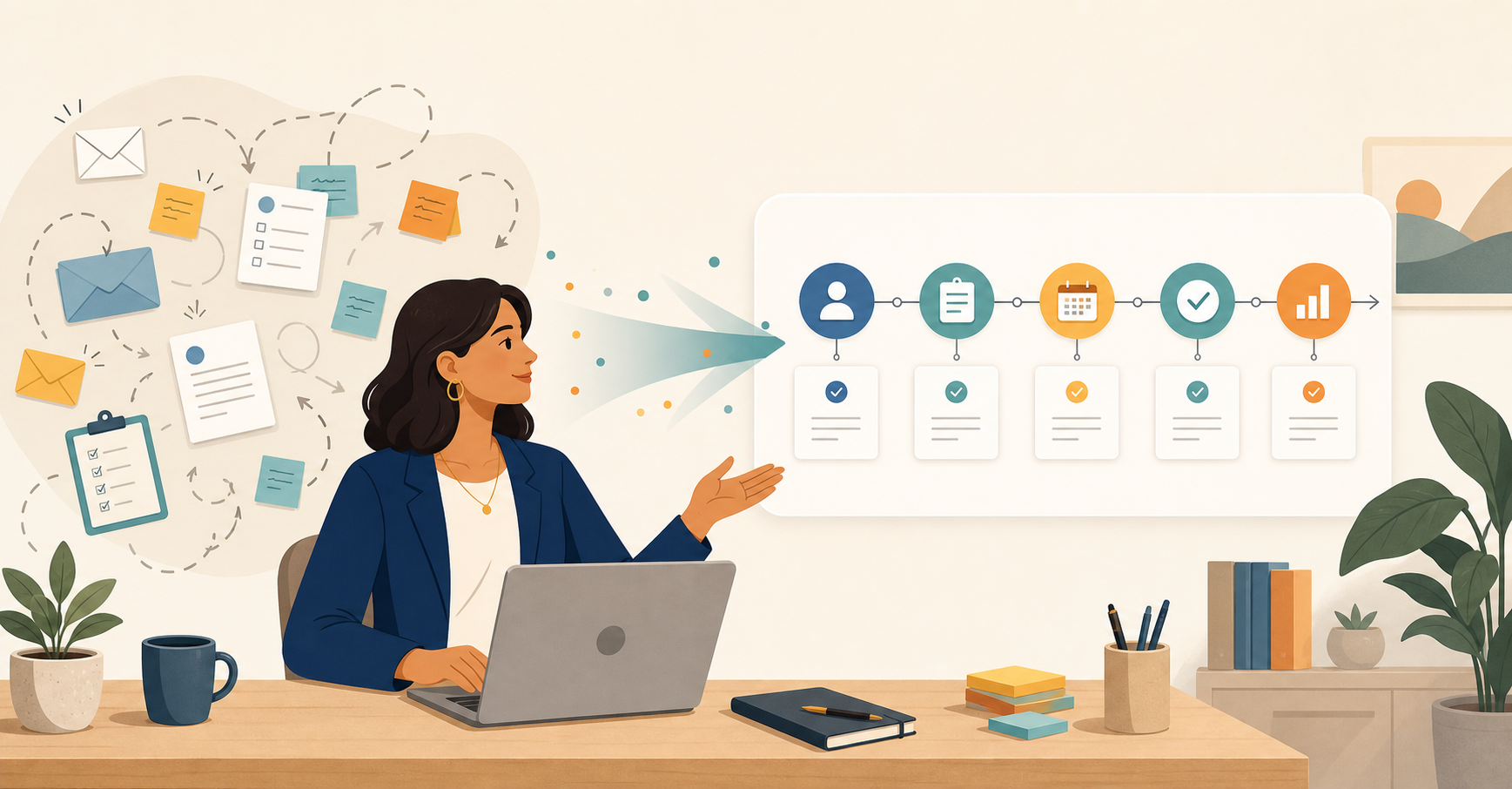
Many small business owners know they are spending too much time on manual work, but they are not always sure what to do about it. Leads need follow-up, onboarding takes too many steps, admin work piles up, and information gets copied between tools more often than it should.
That is where a small business automation consultant can help. But the role is often misunderstood. Some people imagine a highly technical specialist building complex systems. Others think it is just someone who connects apps together. In reality, a good automation consultant does much more than that.
This article explains what a small business automation consultant actually does, where they create the most value, and when it makes sense to bring one in.
Table of Contents
What Does a Small Business Automation Consultant Do?
A small business automation consultant helps identify repetitive, manual, and process-heavy parts of a business, then designs better ways for those workflows to run.
That usually involves a mix of strategy, process review, and technical implementation. The goal is not just to save time. It is to reduce friction, improve consistency, and make the business easier to run.
In practice, an automation consultant often helps with:
- reviewing how a process currently works
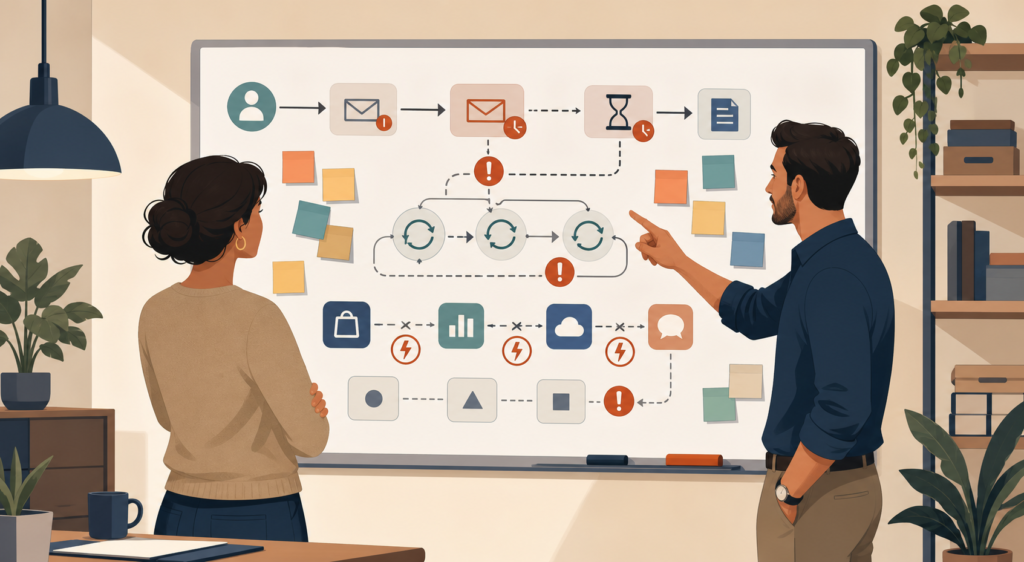
- finding delays, bottlenecks, and repeated manual steps
- deciding which parts are worth automating first
- connecting the tools the business already uses
- building automations for lead follow-up, onboarding, and admin workflows
- testing, refining, and documenting the system
A good consultant is not there just to add software. They are there to simplify how work moves through the business.
What They Usually Do Not Do
It is also helpful to understand what an automation consultant typically does not do.
For example, they are not usually replacing your whole team, rebuilding your business from scratch, or turning every process into a fully automated machine. They also should not be adding unnecessary complexity just because a tool can do something clever.
Strong automation work is usually practical. It focuses on the workflows that are repetitive, rules-based, and worth improving right now.
Signs You May Need a Small Business Automation Consultant
You may benefit from outside automation help if any of these situations feel familiar:
- you respond to leads manually and often later than you want
- client onboarding feels inconsistent or disorganized
- you keep copying information between forms, inboxes, spreadsheets, and project tools
- important tasks live in your head instead of in a repeatable process
- you know there are bottlenecks, but you are not sure what to fix first
These problems are common in small businesses because the systems usually grow gradually. Things work well enough at first, but over time the manual steps stack up and start slowing everything down.
Where a Consultant Often Creates the Most Value
Not every workflow needs attention right away. A good consultant helps prioritize the parts of the business where automation can have the clearest impact.
Lead Follow-Up
Lead follow-up is often the highest-value area to improve first. If inquiries come in through your site, email, or social channels, delayed responses can cost you opportunities before the sales conversation even begins.
An automation consultant can help create a more reliable system for capturing leads, sending confirmations, organizing inquiries, and making sure no one slips through the cracks.
If lead response is where things are slipping, this article on signs your lead follow-up process needs automation shows what that usually looks like in practice.
Client Onboarding
Once someone becomes a client, the onboarding process should feel smooth and predictable. If welcome emails, forms, checklists, or internal handoffs are still handled manually, the experience can feel slower and more fragmented than it needs to.
Automation can make onboarding faster, cleaner, and easier to manage without removing the personal touch.
If onboarding is the bigger friction point, this guide to client onboarding automation for small businesses breaks down the best steps to automate first.
Internal Admin Work
Some of the best automation gains happen behind the scenes. Repetitive admin tasks such as updating records, moving data between tools, creating routine tasks, or sending status updates may not look dramatic, but they can take up a surprising amount of time.
A consultant can help spot these hidden drains and turn them into more reliable workflows.
Tool Connections and Visibility
Many small businesses already use several tools, but those tools do not always communicate well with each other. An automation consultant can help connect them so information flows more cleanly and reporting becomes easier to track.
If your tools feel disconnected, that does not always mean you need a full rebuild. Sometimes you just need a better workflow between them.

What to Look for in a Good Automation Consultant
If you decide to hire help, look for someone who can do more than build automations mechanically.
A strong consultant should be able to:
- understand your business process before suggesting tools
- explain tradeoffs clearly and simply
- focus on practical wins rather than overengineering
- build systems that are maintainable
- recommend what not to automate as well as what to automate
This matters because the wrong automation can create just as much confusion as the manual process it replaced.
When to Hire One Instead of Doing It Yourself
Some business owners can absolutely set up parts of their own automation. If the workflow is simple, the tools are familiar, and you enjoy testing systems, it may make sense to start on your own.
Hiring a consultant is often a better option when:
- you do not have time to diagnose and build the workflow yourself
- the process spans multiple tools or handoff points
- you want to avoid trial and error
- the cost of delays or missed steps is already affecting leads or delivery
In those cases, outside help can speed up the process and reduce the risk of building something messy that you later need to redo.
If you are still deciding which workflow deserves attention first, read workflow automation services for small businesses: which processes to automate first.

A Better Way to Think About Automation
The best automation work is not about removing people from the process. It is about removing unnecessary friction from the process.
For a small business, that may mean faster responses, smoother onboarding, fewer missed steps, and less time spent on repetitive admin work. A good consultant helps you focus on the workflows that matter most and makes sure the system supports the way your business actually runs.
If you want a structured way to identify what to automate first, a workflow review can help surface the biggest bottlenecks and the most practical next step.
Final Thoughts
A small business automation consultant does more than connect tools. They help translate messy daily operations into clearer, more reliable workflows that save time and improve consistency.
If your business is growing but still depends on too many manual steps, this kind of support can help you prioritize the right problems and build systems that are actually useful.
FAQ
What does a small business automation consultant do?
A small business automation consultant reviews your workflows, identifies repetitive manual tasks, recommends what to automate first, and helps build better systems for areas such as lead follow-up, onboarding, and admin work.
When should a small business hire an automation consultant?
It usually makes sense to hire one when manual processes are slowing down lead response, client onboarding, or daily operations, and when the business owner does not want to solve the workflow design alone.
Can a small business set up automation without a consultant?
Yes, especially for simple workflows. But a consultant can help when the process is unclear, crosses multiple tools, or needs a more strategic approach.
What kinds of workflows are usually automated first?
Lead follow-up, client onboarding, and repetitive admin workflows are usually the strongest first candidates because they happen often and directly affect efficiency or customer experience.